It's a January morning, your shower turns lukewarm halfway through, and the DEWA bill is higher than last month. Or maybe your old geyser has started dripping onto the false ceiling, and you need to act quickly. Either way, you now face one big question before any water heater replacement: stay electric or switch to solar?
Here is the honest answer we give Dubai homeowners. Solar usually suits owned villas with open roofs, while electric suits most apartments and rented homes.
This guide compares both on cost, efficiency, maintenance and safety, so you can choose with confidence. If your heater is already failing, you can book a check with our team at any point.
Solar vs Electric Water Heater: Quick Comparison
The table below compares both systems on the points Dubai homeowners ask us about most often.
Factor | Electric water heater | Solar water heater |
| Upfront cost | Low | High, because of panels, tank, pipes and roof frame |
| Monthly running cost | Full electricity cost all year | Low, as the backup heater runs only sometimes |
| Roof access needed | No | Yes, with good sun exposure |
| Best for | Apartments, rented homes, small households | Owned villas and large families |
| Dusty or hazy days | No effect | Lower output, so the backup takes over |
| Maintenance | Simple yearly service | Yearly service plus panel and roof pipe care |
| Typical lifespan (estimate) | Around 8 to 12 years with good care | Panels often outlast tanks, but parts still wear out |
How Does an Electric Water Heater Work?
An electric water heater uses a metal heating rod inside an insulated tank to warm your water. Most people in the UAE call it a geyser, and many homes have one above each bathroom ceiling. A thermostat, which is a small temperature switch, turns the rod on whenever the water cools down. The tank keeps hot water ready, so you get a steady supply each time you open the tap.
Electric heaters are cheap to buy, quick to install and work exactly the same in every season. The downside is cost, because every litre of hot water comes from paid electricity. A tank also loses some heat while it sits, so it uses power even when nobody showers.
How Does a Solar Water Heater Work?
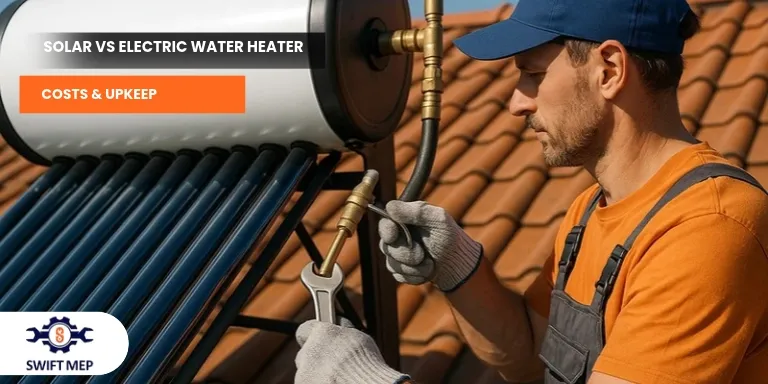
A solar water heater uses roof panels, called collectors, to capture heat from sunlight and warm your water. The heated water then moves into a storage tank, which keeps it hot until your family needs it. Most systems sold for Dubai homes include an electric backup rod for hazy days or heavy use.
You will usually see two main panel types on Dubai rooftops:
- Flat plate collectors: These are flat, glass-covered boxes with dark metal plates that soak up heat all day.
- Evacuated tube collectors: These are rows of glass tubes that hold heat well, even when the air feels cooler.
A direct system heats your household water inside the panels, then sends it straight down to the tank. An indirect system heats a special fluid first, then passes that heat to your water through a coil.
Are Solar Water Heaters Mandatory in Dubai?
Yes, Dubai rules require many new single-owner buildings to get most of their hot water from solar. Under Dubai Municipality Circular No. 183 of 2011, new private villas, hotels and similar buildings must use solar heating.
As Solarthermalworld reports, these buildings must cover at least 75% of yearly hot water needs with solar energy. The rule took effect in March 2012 and applies only where the building has enough roof space available.
Solar water heating also forms part of Al Sa'fat, the green building rating system Dubai applies to new buildings. Buildings with many owners, such as most apartment towers, were not held to the same 75% rule. Rules change over time, so confirm the current Al Sa'fat terms with Dubai Municipality before starting a new build.
How Much Does Each Water Heater Cost in Dubai?
Electric heaters cost much less to buy, while solar heaters cost much less to run each month. We don't list fixed prices here, because the final figure depends on several details at your property:
- Tank size, brand and the number of heaters you need
- Roof height, access and free space for panels
- Pipe length between the roof and each bathroom
- Removal of old units during a water heater replacement
- Any changes needed to the electrical wiring or plumbing lines
What Does an Electric Water Heater Add to Your DEWA Bill?
An electric heater can add a clear amount to your DEWA bill, especially during the cooler winter months. DEWA's slab tariff charges homes 23 fils per kWh for the first 2,000 kWh each month. The rate then rises to 28, 32 and 38 fils per kWh as your monthly use climbs. DEWA also adds a monthly fuel surcharge and 5% VAT, so your real rate per kWh is higher.
Here is what one 80-litre electric heater might cost to run during a typical Dubai winter month:
Daily use | Monthly use | Cost at lowest slab* | Cost at highest slab* |
| 3 kWh | 90 kWh | About AED 27 | About AED 42 |
| 4 kWh | 120 kWh | About AED 37 | About AED 55 |
| 5 kWh | 150 kWh | About AED 46 | About AED 69 |
Note: These are our estimates, not measured figures. They include an assumed fuel surcharge of 6 fils per kWh and 5% VAT.
Many villas run three or four heaters, so these numbers multiply quickly. A well-sized solar system removes most of this cost.
Which Option Saves More Money Over Time?
Solar usually saves more money over time if you own the home and plan to stay several years. Electric makes more sense when you rent, plan to move soon or use very little hot water. In those cases, solar savings may never cover the extra cost of buying and installing the system.
Not sure which option fits your budget? Our technicians can inspect your roof, check your current heaters and give you honest advice. Message us on WhatsApp to book a visit.
Which Water Heater Works Better in Dubai's Climate?
Solar works very well in Dubai thanks to strong sunshine most of the year, but local conditions still matter. Each season and weather event affects the two systems in slightly different ways:
- Summer (June to September): Rooftop water tanks get so hot that cold taps often run warm. Electric heaters barely need to run, while solar panels can overheat the water without protection.
- Winter (December to February): Mains water arrives cooler, so electric heaters run longer and your bills rise. Solar panels still collect good heat on most clear winter days.
- Dust and sandstorms: Dust on the panel glass blocks sunlight and lowers solar output until someone cleans it. Electric heaters stay completely unaffected by dust and sand.
- Coastal areas: Homes near the sea, like those on Palm Jumeirah, face salty, humid air. This air can rust metal frames and fittings faster, so check them more often.
What Are Heat Pump Water Heaters?
A heat pump water heater uses electricity to pull heat from the surrounding air, so it needs no roof panels. It uses much less power than a standard geyser, though it costs more upfront and needs good airflow.
What Maintenance Does Each Water Heater Need?
Both heaters need a yearly service, but solar systems need extra care for their roof parts. Regular water heater maintenance keeps your hot water steady, lowers your bills and helps each unit last longer.
Maintenance task | Electric | Solar | Why it matters |
| Flush sediment from the tank | Yes | Yes | Sediment makes the heater work harder |
| Check the anode rod | Yes | Yes | This rod rusts first to protect the tank |
| Test the pressure relief valve | Yes | Yes | It releases extra pressure safely |
| Check heating rod and thermostat | Yes | Backup only | Keeps heating steady and reliable |
| Clean the panel glass | No | Yes | Dust blocks sunlight from the panels |
| Check roof pipe insulation | No | Yes | Cracked insulation lets heat escape |
Water in Dubai can leave mineral deposits inside tanks and pipes as the months go by. Our guide on hard water damage in Dubai plumbing explains how these deposits form and how to limit them. For a full list of what a proper service includes, read our water heater servicing guide for Dubai homes.
A planned preventive maintenance routine is the easiest way to catch small heater problems before they grow. Our preventive maintenance plans in Dubai let you schedule regular checks for the key systems in your home.
What Safety Checks Matter Most for Water Heaters?
Water heaters combine water, heat and electricity, so these five safety checks protect your family and your home:
- Dedicated circuit: Each electric heater should run on its own circuit breaker, which cuts the power during a fault.
- Earthing and wiring: Loose or old wiring near a wet tank raises the risk of electric shocks and short circuits.
- Pressure relief valve: This valve must open freely, or pressure can build up to dangerous levels inside the tank.
- Mixing valve: Solar systems need one to stop scalding water from reaching your taps during the summer months.
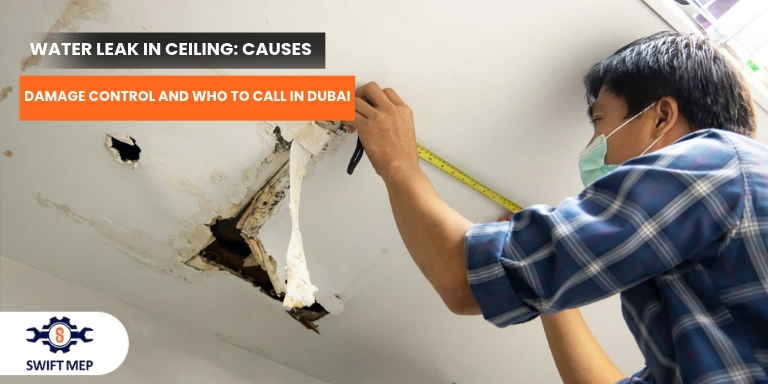
- Leak checks: Water dripping from a ceiling geyser can soak false ceilings, light fittings and wiring below it.
If your heater keeps tripping the power, book a circuit breaker replacement service in Dubai with our electricians. For damp patches around tanks or pipes, our guide to detecting hidden water leaks in Dubai shows the main warning signs.
Which Water Heater Is Right for Your Dubai Home?
The right choice depends on your property type, your family size and how long you plan to stay. Use these common situations as a simple starting guide:
Your situation | Our usual suggestion | Main reason |
| Apartment in JLT, Business Bay or Dubai Marina | Electric | No private roof access |
| Owned villa in Dubai Hills, Mirdif or Arabian Ranches | Solar | Roof space and long-term savings |
| Rented villa | Electric, unless your landlord agrees to solar | Roof work needs landlord approval |
| Large family with high hot water use | Solar or heat pump | Bigger monthly savings |
| Small household or short stay | Electric | Lowest upfront cost |
For villas, always ask for a site visit first, because roof shade and pipe length change the final design.
Planning a new heater for your villa? Our team can check your roof, measure your hot water needs and suggest the right system size. Call or WhatsApp us to arrange a quick site visit.
When Is Water Heater Replacement Better Than Repair?
Water heater replacement makes more sense than repair when the tank fails or the same repairs keep returning. Small faults, like a broken thermostat or a burnt heating rod, are usually quick and cheap to fix. Watch for these signs that point toward a new unit instead:
- Rusty or brown water coming only from your hot taps
- Water leaking from the tank body itself, not just from the pipe joints
- Loud rumbling or popping sounds that continue even after flushing the tank
- Hot water running out much faster than it did a few months ago
- Frequent breakdowns on a heater that has been working for many years
Before you decide, read our guide on why your water heater is not heating, which covers the common fixable faults. If you do need a water heater replacement, it's also the perfect moment to compare solar and electric options properly.
Why Choose Swift MEP for Your Water Heater?
We have over five years of experience handling plumbing, electrical and general maintenance work across Dubai. From our Al Quoz base, our technicians handle repairs, servicing and water heater replacement for apartments and villas. We explain your options in plain words, and we never push a bigger system than your home needs.
As a trusted plumbing service in Dubai, we help you with:
- Water heater checks, repairs and yearly servicing
- Honest advice on solar, electric and heat pump units
- Electrical safety checks for heater circuits and wiring
- Easy WhatsApp booking and fast response across the city
Our plumbing repair services also cover the leaks, valves and pipe faults that often come with older heaters. Explore our water heater maintenance service in Dubai or our full plumbing services in Dubai to see how we can help.
Book Your Water Heater Check With Swift MEP Today
Contact our team now, and we'll find the right hot water setup for your home and budget.
Frequently Asked Questions
Is a solar water heater worth it in Dubai?
Yes, for most owned villas with open roof space, a solar water heater is worth the investment. You pay more at the start, but your monthly hot water bills stay very low for years. For apartments or short stays, an electric heater usually gives better value for your money.
How much electricity does a water heater use in Dubai?
An 80-litre electric heater may use around 3 to 5 kWh a day during winter, by our estimate. That works out to roughly AED 27 to AED 69 a month, depending on your DEWA slab. Usage drops sharply in summer, when rooftop tanks already keep the water warm.
Can I install a solar water heater in my apartment?
Usually not, because apartment roofs are shared spaces controlled by the building owner or owners' association. A quality electric or heat pump unit is the practical choice for most Dubai apartments.
How long does a water heater last in Dubai?
Many electric tank heaters last around 8 to 12 years with regular servicing and good water care. Solar panels often last longer than the tank, although valves, rods and insulation still wear out.
Should I turn off my water heater in summer in Dubai?
Many Dubai residents switch off their electric heaters in summer, because rooftop tanks make the water warm. Turn the heater off at its isolator switch, then check whether your showers still feel comfortable. Switch it back on before December, when the incoming water starts to cool down again.
Which is better: solar, electric or heat pump water heater?
Solar is best for owned villas, electric suits apartments, and heat pumps sit somewhere between the two. Heat pumps use less power than geysers and need no roof panels, but they cost more upfront.
How do I find a plumber near me for water heater replacement?
Search for a plumbing service near me or a plumbing service Dubai residents rate highly, then compare response times. Choose a team that explains both solar and electric options instead of pushing one product. We cover most Dubai areas and offer easy booking through WhatsApp or a quick phone call.